Tonight I am reminded of the power behind play. In the spirit of play, I took some time to explore the online games Jane had on her website available to us. At first I just clicked and played around, but then I started playing through my primary teacher lens. Up until this point, most of the games I explored were geared towards an older audience. I came across a game on the iCivics website that I was incredibly impressed by. You can find the link below.
This is a game focused on teaching young children about immigration. In this game, the player is given scenarios in which people are trying to immigrate to the US by boat. You click on their boat to hear their story and then have to determine which harbor to send them to. For example, if their story says something about being born in the USA then they would go the harbor that says “Born in the USA.” Other harbors include “citizen parents”, “permission to work”, “marriage to a citizen”, and “seeking refuge.” The last option the play has in to “deny entrance.”
I was particularly impressed by how accessible they made this game for young learners. For one thing the interface is simple to use and not overly distracting. The second way they made it accessible was by highlighting key academic vocabulary and allowing kids to click on it to hear a definition. The last and most impactful, in my opinion, choice they made was making all dialogue and text spoken. That is, kids don’t have to be able to read in order to play the game. It also has a points system for putting the boats in the correct harbors. I thought it was a very engaging way to teach young kids about immigration policy.
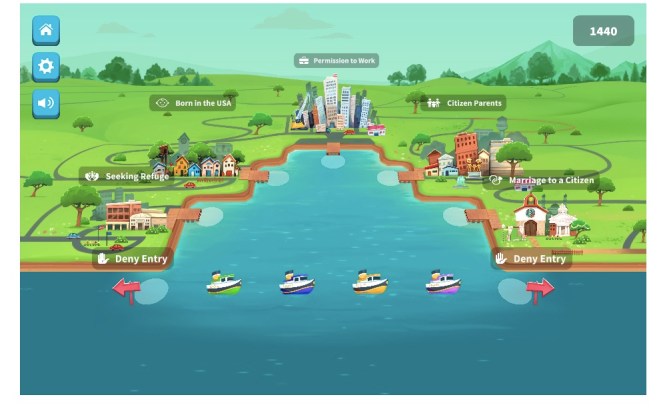
One thing I found interesting and wasn’t a fan of was the exaggerated excitement that comes from narrator’s “good job” when the player correctly identifies somebody who should be denied entrance. For example, there are scenarios where the person wants to come to the US because employment in their country is not good and their parents said a life in the US would be better.” The correct move in the game is to deny entry. I don’ t think this is enough of a negative that I wouldn’t let kids play, but I think it could start a great conversation around their own ideas of immigration and what they think. It could also open doors for talking about the process that somebody has to go through when they want to immigrate. Overall, a very powerful learning experience.
This game reminds me of the power of play. We do a lot of play in primary, but online play is another story. It can be nerve wracking to allow kids to play on the computer. I am reminded that online learning can be so much more than a computer station that kids rotate through. It takes time to find a good online resources, especially ones like this that create a cross-curricular connection to social studies, but well worth the hunt.

 Kindergarten Bookworm