One of the things I’ve been thinking about lately and especially after this week’s core readings is access to digital technology. It’s so wild to me that as teachers we are responsible for preparing children for jobs that haven’t even been created yet and we don’t even have the technology in our classrooms to support such learning.
I was doing some reading on digital tech in early childhood classrooms and their advice, in terms of what tech to purchase, was a digital microscope, an iPad, and a digital camera. None of these items are available when a new teacher walks into the classroom and yet are considered necessities by experts in the field. All you get when you walk into a classroom is stacks and stacks of curriculum. If you want tools like the aforementioned you have to write grants for them or pay out of your own pocket.
I don’t think it’s any surprise that there is a lot of inequity from district to district. Edmonds is 2:1 with Chromebooks for kindergarten and Lake Washington has class sets of iPads. And I know I should be grateful for what I have because there are children who don’t have access to any computers. How can we create more equity and close this digital gap? Anymore, districts are putting serious boundaries around what tech teachers can write grants for and what they can’t. For example, in my district a policy was recently released stating you can only write grants for technology that is supported by Google chrome because that is what the district supports and pays for. I have Chromebooks in my classroom, but find them extremely frustrating to use creatively with kindergarteners. Despite these challenges, even if I wanted to provide my students with tools that were more developmentally user friendly, (cough, iPads, cough cough) the district wouldn’t allow it. This complicates the equity issue even more. From one angle I’m trying to create more equity for my students in comparison to other districts, but from another angle, I could be creating inequity in my own district.
I hate that more demands are being put on me (we now have computer science standards we are obligated to teach) and yet we don’t have the proper technology to teach it. I’ve written grants for robots and incredible programs such as the Dash robot, Cosmo, Osmo software, and more, but it’s becoming increasingly more difficult to get those materials in the classroom. The district has put together “code” boxes that I piloted last year that are supposed to be rotated around the 20+ elementary schools in my district, but we all know that are students should have access to these materials everyday!
There is only one solution…fully fund education!
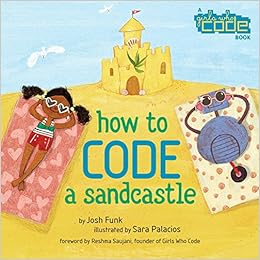 The children’s book I’ve chosen to accompany this post is called “How to Code A Sandcastle” by Josh Funk. This is a great picture book to use to introduce kids to coding. I also love that the main character in the book is a female, which I LOVE because it addresses the lack of female representation in science. The gist of the story is that all summer long Pearl is trying to build the perfect sandcastle, but various obstacles keep knocking it over. In her last attempt before summer vacation is over, but with the help of her robot pal, Pascal, she decides to use code to build her masterpiece.
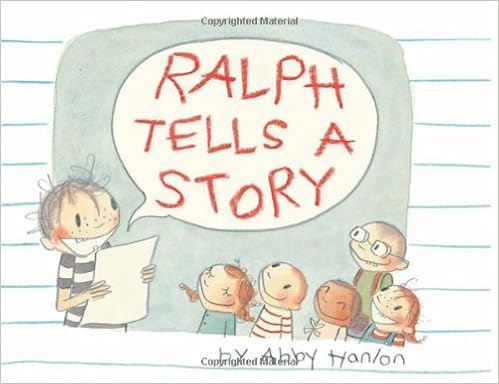 The book I’m featuring in this post is called, “How To Write A Story” by Abby Hanlon. Ralph is forced to write stories everyday in writer’s workshop, but he never feels like anything exciting happens to him that’s worth writing about. With the help of his classmates, soon Ralph realizes he has loads of stories to write. This is a book that I read each year as I’m launching writer’s workshop and is always loved by the kids. Finding an idea for writing is challenging for a lot of kids, but this book will make them think differently about the everyday events that happen that are stories worth writing about.
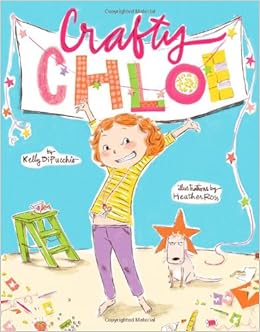 The book that creativity makes me think of is Crafty Chloe by Kelly DiPucchio. In the story Chloe is invited to a friends birthday party and is trying to figure out the perfect gift. The other girls going to the party share what they bought and they are all expensive things. Chloe decides to make her gift and at first it isn’t well received by the other girls. Little do they know, Chloe’s gift is the thing that saves the day! This is a sweet story that helps us remember just how capable, innovative, and creative kids can be!
 A year ago my dad retired and a year ago my niece (first grand baby) was born. It has been so interesting to see how those two event has led to his interest in technology. It started out by him becoming more curious about his phone and developing a need for a better camera. Then he started to take time to come up with this witty captions for photos of baby Z. This led to random group texts about all the things he was learning to do on his phone. After this he became interested in learning how to make memes. These of course were also of Z. The fun has really begun now due to his recent discovery of iMovie. It started out with making short films littered with pictures of Z. Then it evolved to included video footage which meant learning some basic editing skills. His mind was blown when he learned how to add background music! Now he is intentionally capturing footage and photos with specific movies in mind. All of this to say, as obnoxious as the group texts can be. I’ve never seen my dad happier and more excited. I don’t normally think he views himself as somebody who is creative, but boy have the creative juices been flowing. I can’t help, but wonder if this new-found interest and love for technology would exist in the absence of baby Z? She is clearly his inspiration!
 When I think about this aspect of social media, I mostly think about Instagram and Facebook. I’ve noticed this in my friend group over the years, but even my own family members. As soon as somebody posts something, they are completely consumed with checking how many “likes” it’s gotten. Sometimes even going so far as to inquire if I liked their post. I can’t help, but wonder if people are just looking for validation? I wonder how unhealthy this can become? My feed constantly gets bombarded with people chronicling their weight-loss journeys and transformations of themselves. Isn’t the point to better yourself and do it for yourself? Why then do people feel it’s necessary to post about it for the sake of getting people to “like” it. I suppose it could be motivating, but it’s not a culture that I like to take part in. Some people have become so consumed by crafting the right picture or post that they completely lose sight of enjoying the moment.
 Kindergarten Bookworm